
 Claire, Dan and I are experienced nurse practitioners and previously worked in emergency medicine. Being senior clinicians specialising in minor injury management provided us with a broad and diverse understanding of anatomy and physiology. Assessing, diagnosing, and treating injuries such as fractures and soft tissue injuries and exploring and repairing wounds gave us significant knowledge and understanding of anatomy and physiology, particularly facial anatomy.
As nurses now specialising in aesthetic and cosmetic medicine, it is imperative that we broaden our understanding of facial anatomy even further through cadaver dissection training which provides the knowledge and skills necessary to deliver safe, effective and personalised treatments while advancing professional development in the specialised field.
When the face is injected with medicines such as Botulinum Toxin and medical devices such as fillers, it is injected into muscles, subcutaneous and deep facial fat pads, as deep as the facial bones.
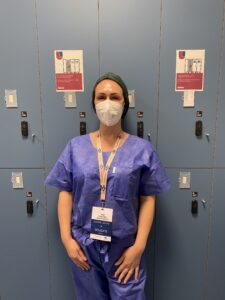 Cadaver dissection for anatomy training provides an opportunity to understand the precise nature of human tissues with their clinical and structural relationships, to ensure that procedures are performed with precision reducing the risk of complications such as nerve and vascular injury.
The majority of anatomical texts available are not current or specific in portraying the detailed knowledge required to deliver a safe and high standard of aesthetic medical treatments to patients, or may be inconsistent in detail. The additional training encompasses detailed facial anatomy of neurovasculature, fat compartments, ligaments and muscles followed by simulated practice of safer injection techniques.
The unique opportunity to inject and dissect allows us to ensure that we can accurately place injectables in a safe area and enhance our practice.
Our clinic nurses have previously completed anatomy classes and cadaver dissection in the UK and Milan.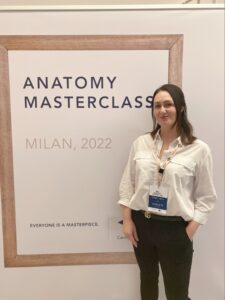
Claire, Dan and I recently travelled to Verona, Italy to attend a Facial Anatomy Class, and it was an experience like no other. As nurses, the chance to work with cadavers and learn from experts in the field is both exciting and humbling.
The masterclass took place in a state-of-the-art anatomy lab, equipped with all the necessary tools and resources for a hands-on learning experience. When you walk into these labs you’re filled with a mix of anticipation and nervousness. The smell of preservatives and the sight of cadavers reminds us of the responsibility that comes with studying human anatomy.
The instructors leading the masterclass were seasoned professionals with years of experience in anatomical studies. It was a great pleasure to be taught by Professor Sebastian Cotofana, M.D., Ph.D., Ph.D., who is recognized globally as the world’s leading anatomist in the field of facial aesthetics. He guided us through the process of cadaver dissection with precision and care, emphasising the importance of respect for the donors who had generously contributed their bodies for educational purposes.
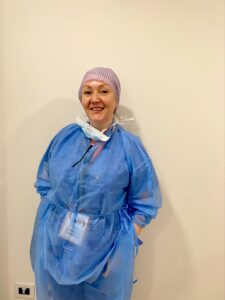
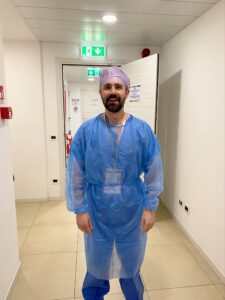
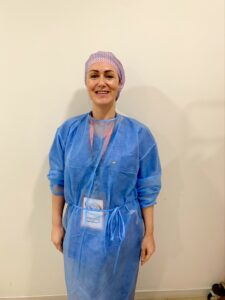 As we delved into the dissection process, we were struck by the intricacy and complexity of the human body. Every incision we made revealed a new layer of anatomy, deepening our understanding of the interconnected systems that make up our bodies. It was a profound experience to witness first hand the structures which we study in textbooks come to life before our eyes.
One of the most valuable aspects of the masterclass was the opportunity to interact with our peers and engage in discussions about the anatomical findings. Collaborating with fellow students and sharing our observations enriched the learning experience and allowed us to see the human body from different perspectives.
Throughout the masterclass, we were reminded of the privilege and responsibility that comes with studying medicine. Working with cadavers teaches us not only about anatomy but also about the fragility and resilience of the human body. It reinforces the importance of empathy, precision, and continuous learning in the practice of aesthetic medicine.
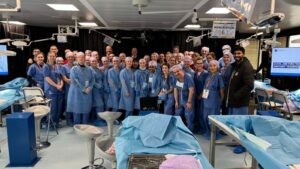 Attending this class was a transformative experience that deepened our appreciation for the intricacies of the human body. We are grateful for the opportunity to learn from experts, and we carry the lessons and memories from this masterclass with us as we continue our journeys in the field of aesthetic medicine.
We can never have enough facial anatomy training, it is vital to continue to develop a deep understanding of applied clinical and functional anatomy, throughout our ongoing clinical practice.
Joanne Nixon, Nurse, INP