what is wrinkle softening treatment?
In aesthetic medicine, many refer to procedures involving the injection of Botulinum Toxin Type A (BoNT-A) as ‘anti-wrinkle injections’ or ‘wrinkle softening/relaxing injections’. This treatment is also referred to as ‘Botox’, however, this is a medicine brand name.
In the UK there are strict regulations on the advertising of prescription only medicine (POMs).
The purpose of this page is to provide information on Botulinum Toxin Type A and the treatment of lines and wrinkles, and facial contouring/balancing. Mid Yorkshire Skin Clinic will follow legislation and professional guidance and will not advertise this treatment by using any patient images.
What is botulinum toxin (bont-a)?
BoNT-A is a naturally occurring protein produced by the bacterium Clostridium Botulinum. The neuromodulating medicine is injected into the target muscle to temporarily block signals from nerves to muscles which normally stimulate contraction of muscles. Once muscle is relaxed overlying skin appears smoother, appearance of wrinkles improve, or the formation of wrinkles is delayed.
BoNT-A can only treat wrinkles of expression. Wrinkles present when the muscle is not contracted, and the face is relaxed generally do not improve.
BoNT-A is also licensed for the treatment of focal spasticity, chronic migraine, bladder disorders, and excessive sweating.
What brands are used?
Brands available in the UK include Botox©, Nuceiva©, Azzalure©, Bocouture©, Alluzience©, Letybo©. The name of the medicine and serotype is the same ‘Botulinum Toxin Type A’. There are slight differences in the way that the medicines are stored, prepared and administered.
Botox was the first medicine used in the UK in 1994. In our clinic our preference is Nuceiva or Azzalure, which can offer advantages in terms of diffusion patterns, onset of action, duration of effect, and individual patient response.
The preference for a particular brand ultimately comes down to a careful assessment by a nurse prescriber, considering factors such as the specific treatment area, desired outcome, and individual patient characteristics.
What areas can be treated?
BoNT-A license is for the temporary improvement in moderate to severe lateral canthal lines (crow’s feet at the outer corners of the eyes), glabellar lines (frown lines between the eyebrows) and horizontal forehead lines. Each brand holds a different license. There are other areas which are less commonly treated. Although these areas are not licensed, they are well established and have evidence to support their use. Your nurse should discussing licensing during your consultation.
- Glabellar lines (frown lines/wrinkles)
- Lateral canthal lines (crow’s feet)
- Horizontal forehead lines/wrinkles
- Gummy smile
- Bunny lines (wrinkles on the nose)
- Nose (for wrinkles, nasal flaring, drooping tip)
- Perioral lines (wrinkles around the lips)
- Platysmal bands (neck)
- Jawline (Nefertiti Lift)
- Masseters (Bruxism, slimming of jaw muscles)
- Depressor anguli oris (mouth corners)
- Mentalis (Chin dimpling)
- Brow lifting
- Hyperhidrosis (Excessive Sweating)
What happens during my consultation?
All brands are Prescription Only Medications (POMs) and can only be prescribed by an experienced doctor, nurse, dentist or pharmacist with a prescribing qualification working within the aesthetic medicine speciality. If you are considering treatment, you must have a face-to-face consultation with a clinician who is qualified to prescribe BoNT-A before the procedure.
At Mid Yorkshire Skin Clinic all nurses are registered with the Nursing and Midwifery Council (NMC) and possess an additional independent prescribing qualification. Our nurses maintain their registration and prescribing privileges every year with the NMC, and revalidate with the NMC every 3 years aligning with the NMC guidelines.
The Consultation
In clinic consultation will take place with your nurse including a detailed medical and psychosocial history. You will receive relevant information in order to make an informed decision about whether to go ahead with treatment, and the costs involved.
Your consultation and treatment will be on a separate day, allowing a ‘cool off’ period to consider all of the information provided.
You should never feel pressurised or coerced into having treatment at the same time as your consultation.
What happens during my treatment appointment?

Consent
Before treatment, any further questions will be answered and an electronic consent form will be completed. The risks, benefits, and alternative treatments will be discussed.

Photographs
Photographs are taken in order to compare the outcome at treatment review. Photographs taken will form part of your medical record and will not be used for any other purpose. Before and after photographs of treatments involving POMs are not allowed, they are both illegal and unprofessional.

Infection Control
Your nurse will ensure that the room and equipment is clean and appropriate for use. The nurse will handwash and wear the appropriate personal protective equipment. Your nurse will ensure that you are prepared for treatment with your hair away from your face and make up removed.

Preparation & Planning
Your skin will be disinfected with Clinisept antimicrobial solution. Your nurse will examine the treatment area to determine the most appropriate injection sites and dosage required. A treatment plan will be made and the area may be marked with a clean skin marker. The medicine is NOT injected through these marks as this risks skin infection.

Treatment
The medicine is mixed with a small amount of sodium chloride and injected using a syringe with a tiny needle. The medicine is injected into muscle or intradermally depending on the area being treated. Some patients describe this as a pinch. An aseptic non-touch technique is used to administer the medicine.
results
The treatment goal is not eliminating all movement, but softening and creating a more refreshed, youthful appearance. A ‘frozen look’ may not be aesthetically pleasing. Achieving a balance between reducing signs of ageing and preserving natural expression is key. It is important to discuss expectations with your nurse prior to treatment. Patient safety is our responsibility and primary concern.
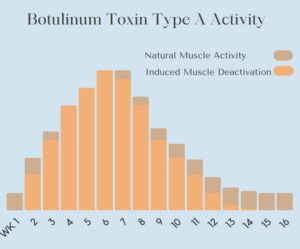
The effects of BoNT-A begin around 4-5 days post treatment, with the full effect by around day 10. Your nurse will offer follow-up between 2-3 weeks (our clinic protocol), when the effects of treatment can be reviewed. Additional BoNT-A may be administered at this time if needed. There is no further charge at this appointment. The evidence suggests that BoNT-A treatments should certainly not be adjusted before 2 weeks or after 4 weeks.
Over approximately 2 to 4 months, the nerve terminal recovers and movement in the treated area restarts. Treatment can be repeated between 3-4 months to maintain the desired results. It is not recommended to repeat treatments at intervals of less than 12 weeks. Static lines that are present at rest, may soften once BoNT-A has taken effect and with repeated treatments may continue to improve as the skin recovers and is no longer being creased by constant muscle action. There are no known long-term side-effects from having repeated treatments, although there may be some muscle wasting (atrophy) with repeated treatments too regularly.
It is possible for patients to develop neutralising antibodies to BoNT-A, which makes the medicine less effective for future treatments. To reduce the risk of this your nurse will recommend appropriate treatment timescales and adjustments.
How long do the results last?
is the treatment safe?
Millions of BoNT-A treatments have been performed worldwide and it has an excellent safety profile. However, as with any medical aesthetic procedure, there are certain risks and side-effects which should be discussed with you during your initial consultation.
Side-effects may be more likely due to the following factors:
Patient factors: Poor condition of the skin, loss of elasticity, heaviness of the forehead, certain autoimmune or chronic medical conditions.
Practitioner factors: Training, years of experience, number of procedures performed.
Premises factors: Suitability of the premises. Cleanliness and hygiene.
Side-effects include:
- Injection site pain
- Bleeding and/or bruising at the injection sites
- Redness, itching, irritation at the injection site
- Swelling, including under eye puffiness
- Headache, which may last several days
- Nausea and/or hot flushes
- Poor cosmetic results, uneven effect
- Drooping or heaviness of the brow or eyelid
- Abnormal appearance of the brows
- Blepharitis
- Eye pain or visual disturbance
- Paraesthesia
- Muscle twitching
- Flu-like symptoms
- Anxiety symptoms
- Rarely, muscle or joint pains
in which cases is treatment unsuitable?
Treatment results are more successful when the skin is in a good condition, with good elasticity, and minimal static lines in the area to be treated.
You may not be suitable for treatment if any of the following apply:
- You are pregnant or breast-feeding
- You have a certain neurological disorder or taking certain medicines such as some antibiotics
- Treatment cannot go ahead if there is any skin infection in or near the treatment area, including cold sores.
- The treatment is licensed for ages 25 to 65; although is occasionally used off-license for example if a mature patient has been receiving BoNT-A injections for some time and the medicine is still effective when they are over 65. A younger patient may also receive the medication for asymmetry or a medical condition affecting their life.
treatment planning
If you are unwell on the day of your appointment, contact the nurse to reschedule.
Ensure your nurse is informed if there are any changes in your medical history or medication taken before receiving any treatment.
Planning treatment within 2 weeks of an important social event is not ideal, this may not allow enough time to have correction if the desired result is not achieved.
After treatment, most people can resume their normal daily activities. Immediately after treatment, there may be some redness, minor swelling at the injection sites and pin-prick marks, which should settle in time. If you develop any bruising, which may be apparent at the time of treatment or may even develop over the following days, it is usually minor and can be covered with make-up. Occasionally, more significant bruising can occur. Rarely, you may develop a headache after treatment which can last a few days. Simple analgesia can be taken for this if needed.
- You are pregnant or breast-feeding
- You have a certain neurological disorder or taking certain medicines such as some antibiotics
- Treatment cannot go ahead if there is any skin infection in or near the treatment area, including cold sores.
- The treatment is licensed for ages 25 to 65; although is occasionally used off-license for example if a mature patient has been receiving BoNT-A injections for some time and the medicine is still effective when they are over 65. A younger patient may also receive the medication for asymmetry or a medical condition affecting their life.
aftercare instructions
- Do not apply make-up for 12 hours after treatment to reduce the risk of infection.
- Try to avoid touching or rubbing the treated area until the following day as you may affect the results of treatment.
- Avoid extremes of hot or cold, vigorous exercise, and swimming for 24-48 hours.